For aesthetics training providers
CPD accreditation for aesthetics and beauty training
Last reviewed 23 October 2026 · 7 min read
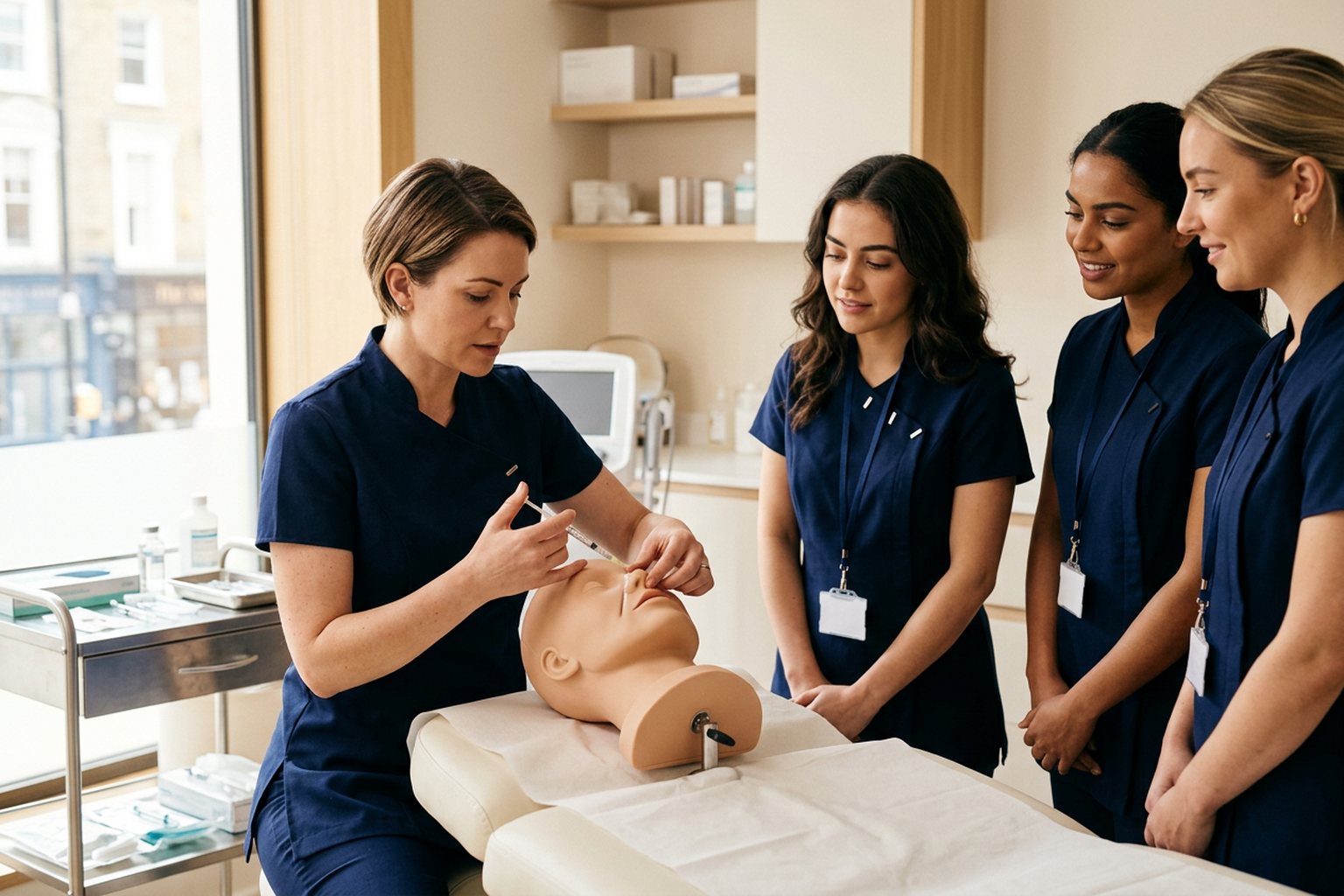
Aesthetics is one of the fastest-growing training markets in the UK, and one of the least regulated — for now. That combination has produced a lot of training, and a lot of loosely-worded “accredited” claims. If you deliver aesthetics or advanced beauty training, independent CPD accreditation is a way to show a course was genuinely assessed against a published standard. But this is a sector where being precise about what accreditation does — and does not — mean matters more than almost anywhere else.
The short answer: CPD accreditation confirms that a specific course was independently assessed against a published standard, with stated outcomes and verifiable certificates. It is not a licence to perform procedures, not a regulated qualification, and not approval by any government or professional body. In a sector where overstated claims are common, that precision is the point — honest accreditation is worth more than an impressive-sounding badge.
A sector facing new regulation
Non-surgical cosmetic procedures in England are, at the time of writing, largely unregulated — but that is changing. The Health and Care Act 2022 gave the government power to introduce a licensing scheme for England, a consultation ran, the government response was published in 2025, and in October 2025 the government confirmed its commitment to legislating. As of now the scheme is not yet in force, and no firm implementation date has been published; Scotland has moved ahead separately. Anyone relying on the regulatory position should check its current status directly rather than assuming it from any single page.
The proposals point toward mandatory training, a qualifications regime, indemnity cover and premises standards. That direction makes demonstrable, independently-assessed training more valuable, not less — providers who can already show their courses meet a published standard are better placed for whatever the scheme requires.
Why honest CPD accreditation matters here
Because the sector is largely unregulated, “accredited” is used freely, and buyers — and learners — struggle to tell a meaningful mark from decoration. That is exactly the gap a credible accreditation fills, and exactly why the credibility of the accreditor matters. A mark from a body with a published standard, real assessment and verifiable certificates tells a prospective learner something; an anonymous “accredited” stamp tells them nothing.
For a training provider, that cuts both ways: an independently-assessed course is a genuine differentiator in a crowded market, and overstating what accreditation means is a real risk when regulation and scrutiny are tightening.
What AssuredCPD assesses on an aesthetics course specifically
Each course is reviewed by a person against our published Standards Framework. For aesthetics training we look closely at:
- Currency. Guidance, best practice and the regulatory picture are all moving. We check content is current and that you have a plan to keep it updated.
- Honest scope. What the course does and does not qualify a learner to do must be clear — CPD is not a licence to practise.
- Proportionate hours, not inflated.
- A credible check of learning, appropriate to a field with real client-safety stakes.
Who this is for — and who it isn't
This is for providers of aesthetics and advanced beauty training who want independent, credible assurance that their courses meet a published standard — and who want to make accurate claims in a market full of inflated ones.
It is not a licence, a permission to perform procedures, or a regulated qualification. Practical and clinical competence in cosmetic procedures is a separate matter from CPD accreditation of a course, and in time will sit within the licensing scheme. CPD accreditation assures the quality of the learning; it does not authorise anyone to treat clients.

Common aesthetics courses we accredit
These are typical of what aesthetics and advanced-beauty training providers submit for the CPD element of their training. The list is indicative, not exhaustive:
- Anatomy and physiology for aesthetic practice
- Skin health, assessment and consultation
- Infection prevention and control in clinic settings
- Complications awareness and management knowledge
- Consent, record-keeping and professional conduct
- Product and treatment theory modules
- Client care, safeguarding and mental health awareness in aesthetics
CPD accreditation assures the quality of the learning in these courses. It does not authorise anyone to perform procedures — practical competence sits separately and, in time, within the planned licensing scheme.
Where aesthetics courses commonly fall short
The reasons an aesthetics course is sent back are consistent, and all are avoidable:
- Overstated scope. Implying a course qualifies a learner to perform procedures, when CPD accreditation does no such thing, is the most serious failing in this sector.
- Out-of-date content in a field where guidance and the regulatory picture are both moving.
- Inflated hours relative to the learning.
- No credible assessment in a field with real client-safety stakes.
How it works, practically
Submit the course — outline, materials, assessment method, claimed hours and review policy. A named assessor reviews it against the six domains and returns a written decision within five working days of a complete submission. Once accredited, you display the AssuredCPD mark on that course and issue certificates with a verification code learners and clients can check.
Pricing
A single course is £350 for the first year (£245 renewal). Annual membership covering multiple courses starts at £975, usually cheaper from around three courses upward — which suits most aesthetics-training catalogues. Prices exclude VAT, with no per-certificate fees. See the pricing page.
What we're honest about
This is the sector where honesty matters most, so we are blunt: CPD accreditation is not a licence to practise, not a regulated qualification, and not government or professional-body approval — and no CPD body can grant any of those. It accredits the course, not the individual. If a training provider tells a learner that accreditation lets them perform procedures, that is wrong, and we say so about our own mark too — see what you can and can't claim.
Common questions
Does CPD accreditation let someone perform aesthetic procedures?
No. CPD accreditation confirms a course was independently assessed against a published standard. It is not a licence to practise and does not authorise anyone to perform procedures. In England, a licensing scheme for non-surgical cosmetic procedures is planned under the Health and Care Act 2022 but is not yet in force.
Is aesthetics training regulated in the UK?
Non-surgical cosmetic procedures in England are largely unregulated at the time of writing, though the government has committed to introducing a licensing scheme under powers in the Health and Care Act 2022. It is not yet in force and no firm date has been published. Scotland has moved separately. Always check the current regulatory position directly.
Why does the choice of accreditation body matter in aesthetics?
Because the sector is largely unregulated, the word 'accredited' is used loosely and buyers struggle to tell a meaningful mark from a decorative one. A credible accreditation body publishes its standard, assesses courses with a person, and provides verifiable certificates, so the mark actually means something. An anonymous accreditation stamp does not.
Can AssuredCPD accredit our aesthetics training courses?
Yes, where the course is CPD training. Each course is assessed by a person against the published Standards Framework and, if it meets the standard, carries the mark and verifiable certificates. This assures the quality of the learning; it does not authorise learners to treat clients.
How much does it cost to accredit an aesthetics course?
A single course is £350 for the first year and £245 on renewal, excluding VAT. Annual membership for multiple courses starts at £975, usually cheaper from around three courses upward. There are no per-certificate fees.
Apply for accreditation See pricing
AssuredCPD is an independent CPD accreditation body. We are not a government or regulatory body and do not award regulated qualifications. CPD accreditation confirms that a course was independently assessed against our published standard; it is not a licence to practise and does not replace any mandatory, regulated or statutory training a role requires.